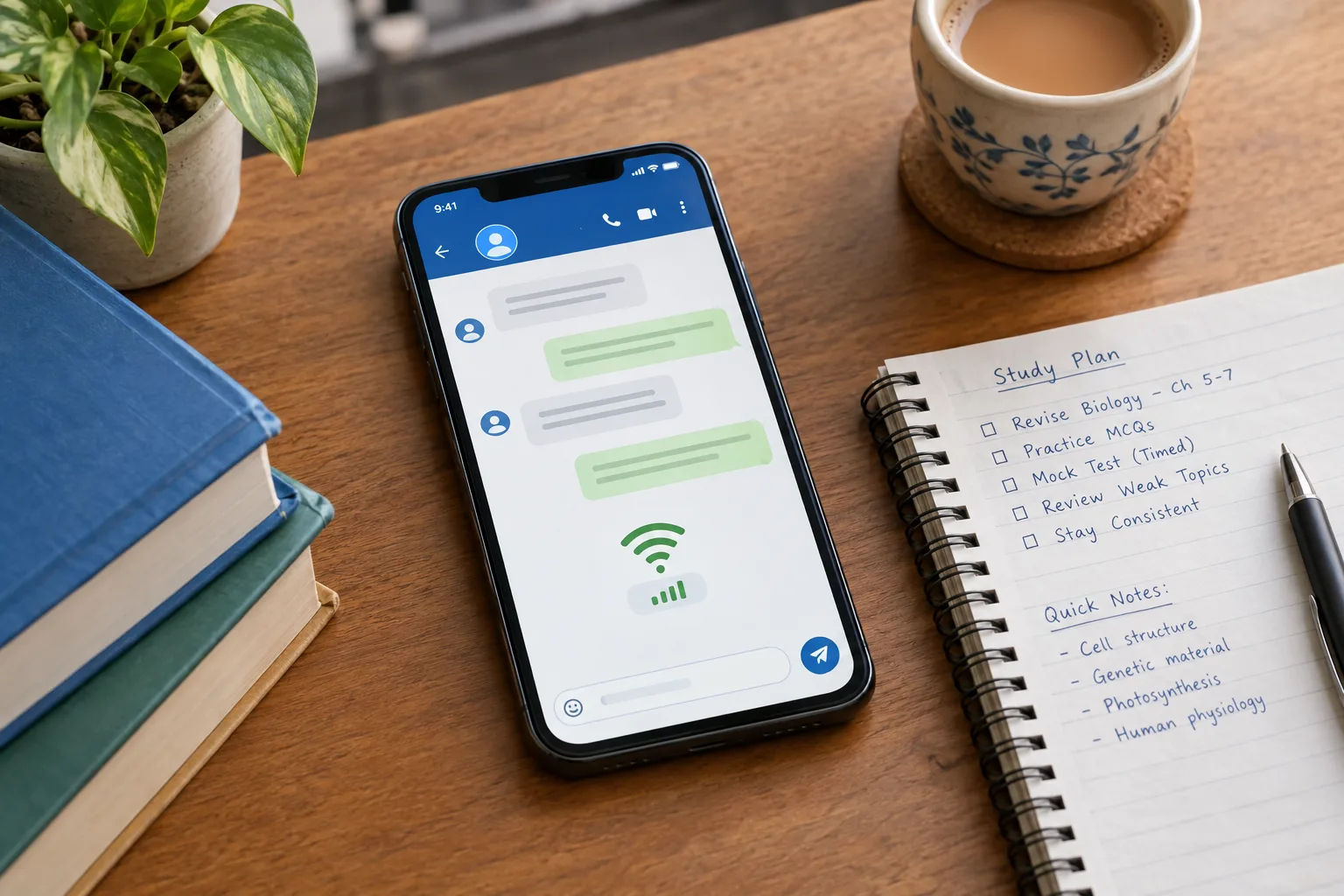
If you searched "is Telegram banned in India" or "Telegram not working in India" in the past week, you were not alone. A temporary government restriction on Telegram around the NEET-UG medical entrance re-exam sent millions of users looking for answers — and, according to multiple reports, triggered the biggest VPN download surge India has seen in 2026. This guide explains what really happened, whether Telegram is back and safe to use, and gives you the honest version of what a VPN can and cannot do in a moment like this.
Is Telegram Banned in India Right Now?
No — the restriction was temporary and tied to a specific event. India's Ministry of Electronics and Information Technology (MeitY) directed Telegram to restrict access in the country only until 22 June 2026, the day after the NEET-UG re-exam. As of 23 June 2026, Telegram has been restored to the Google Play Store and Apple App Store, and the app has started functioning again for users across India. Some people may still need to update the app or restart their device before messaging works normally.
One detail that has confused users: MeitY separately asked Telegram to keep the message-editing feature disabled in India until 30 June 2026. So even with Telegram "back," you may find that editing sent messages does not work yet. That is expected, not a bug on your phone.
Why Was Telegram Restricted Before the NEET-UG Re-exam?
This was not a blanket "Telegram is bad" decision. The National Eligibility cum Entrance Test – Undergraduate (NEET-UG) is the gateway to medical college in India, and nearly 2.28 million candidates sat the exam on 3 May 2026 at over 5,000 centres. Within days, the National Testing Agency (NTA) scrapped that exam after allegations of a paper leak, and protests spread across the country.
Ahead of the re-exam on 21 June, authorities said organised cheating rackets were using Telegram channels, groups and bots to advertise — and sell — supposed access to the exam paper, sometimes demanding hundreds of thousands of rupees from anxious families. The Central Bureau of Investigation (CBI) is investigating, with more than a dozen arrests reported, and the Indian Cyber Crime Coordination Centre (I4C) took down a large number of fraudulent channels. The temporary restriction was the government's blunt tool to disrupt that activity during the exam window.
It was not universally welcomed. The Internet Freedom Foundation criticised the block as reactive and disproportionate, pointing out that thousands of genuine students rely on Telegram for study groups and doubt-clearing, and that a leak originating inside the exam system is not fixed by blocking an app.
"Blocked", "Down", "Removed", "Banned" — They Are Not the Same Thing
A lot of the panic came from mixing up four different situations. It helps to know which one you are actually facing before you change any settings:
- Blocked / restricted: access is deliberately limited at the network or app-store level, as happened here. This is usually region-wide and time-bound.
- Down: Telegram itself has a technical outage. This affects users everywhere, not just India, and no setting on your phone will fix it.
- Removed: the app is temporarily pulled from the Play Store or App Store listing — you can still use an installed copy, but cannot freshly download or update it.
- Banned: the everyday word people use for all of the above. A permanent, indefinite ban is a very different thing from a temporary, event-linked restriction like this one.
Knowing the difference matters, because the fix is different each time — and in some cases there is no "fix" on your end at all.
Is Telegram Safe to Use in India?
Telegram the app is legal and back to normal. The real safety question is about how you use it. Private one-to-one chats and trusted groups are one thing; large public channels, unknown bots, forwarded files, and accounts promising "leaked papers" or guaranteed results are where people get scammed. The NEET episode is a textbook example: the danger was never Telegram's existence — it was fraudsters operating on it. Treat any channel that asks for money in exchange for confidential material as a scam, full stop, and rely on official NTA and government sources for exam information.
Why VPN Searches Spiked During the Restriction
When access was curbed, VPN downloads and searches climbed sharply across India — TechCrunch reported it as the country's biggest VPN download surge of the year. That reaction is common worldwide: whenever a popular app is restricted, people reach for a VPN as a reflex. But a surge in downloads is not the same as a surge in good decisions, so it is worth being clear-eyed about what a VPN is genuinely for.
What a VPN Can — and Cannot — Do Here
Let's be honest, because this is where a lot of online advice gets it wrong:
What a VPN is genuinely good for:
- Encrypting your traffic on public and shared Wi-Fi (cafés, airports, hostels, coaching centres) so others on the network cannot snoop on what you are doing.
- Reducing how much your internet provider can see and log about your everyday browsing.
- Fixing flaky or filtered DNS so pages and apps load more reliably.
- Keeping a consistent, private connection when you travel and hop between unfamiliar networks.
What a VPN is not for: A VPN does not make exam fraud legal or safe, and it will not turn a scam channel into a trustworthy one. Using any tool to access cheating networks or to get around lawful exam-integrity measures is wrong and can carry serious consequences. The goal of better privacy is to protect you — your data, your connection, your everyday browsing — not to break rules. If your interest in a VPN is only "how do I unblock the next app the moment it is restricted," that is the wrong reason. The durable reason is everyday digital hygiene.
Using Telegram (and Any App) More Safely From Now On
- Never pay anyone for "leaked" exam papers, answer keys, or guaranteed results — it is fraud, and there is no genuine paper outside the secured exam chain.
- Verify exam news only on official NTA and government channels, not forwarded screenshots, which can be edited or fabricated.
- Leave and report channels that promise confidential material or demand money.
- Keep your apps updated from the official Play Store or App Store, especially after a restriction is lifted.
- On public or shared Wi-Fi, use a trustworthy VPN and DNS tool to keep your traffic private.
Where VPN 111 Fits: Privacy First, Not Rule-Breaking
VPN 111 is built as a privacy and DNS app for ordinary, everyday use — safer browsing on public Wi-Fi, cleaner and more reliable DNS, less exposure to your ISP, and a steady private connection when you travel. That is the honest, long-term value: protecting your own data and connection, every day, not chasing whichever app made the news this week. The NEET-UG episode will fade; the habit of using your phone privately and responsibly is what actually pays off.
The Bottom Line
Telegram was never permanently banned in India. It was temporarily restricted around the NEET-UG re-exam to disrupt cheating rackets, the block ended on 22 June 2026, and the app returned to the app stores on 23 June (with message editing still paused until 30 June). The bigger, lasting lesson is not "which VPN unblocks Telegram" — it is scam awareness, trusting official sources, and using privacy tools for the right reasons.