

You are on café wifi, your browser throws a location mismatch, pages load with aggressive ad-style popups, and you realize your privacy setup has become a patchwork of half-understood tools. The short answer is this: searches for surfshark, binwiz vpn, turbo vpn, ostrich vpn, and vpn super are less about brand curiosity and more about a market shift toward simple, multi-purpose privacy tools that feel easy on mobile.
I study digital identity behavior through temporary SMS and email verification habits, and the pattern is familiar to me. People rarely go looking for a virtual private network because they want networking theory. They search after friction: blocked signups, noisy ads, suspicious public wifi, unstable home wifi, or a feeling that their browser and DNS choices are exposing more than they expected.
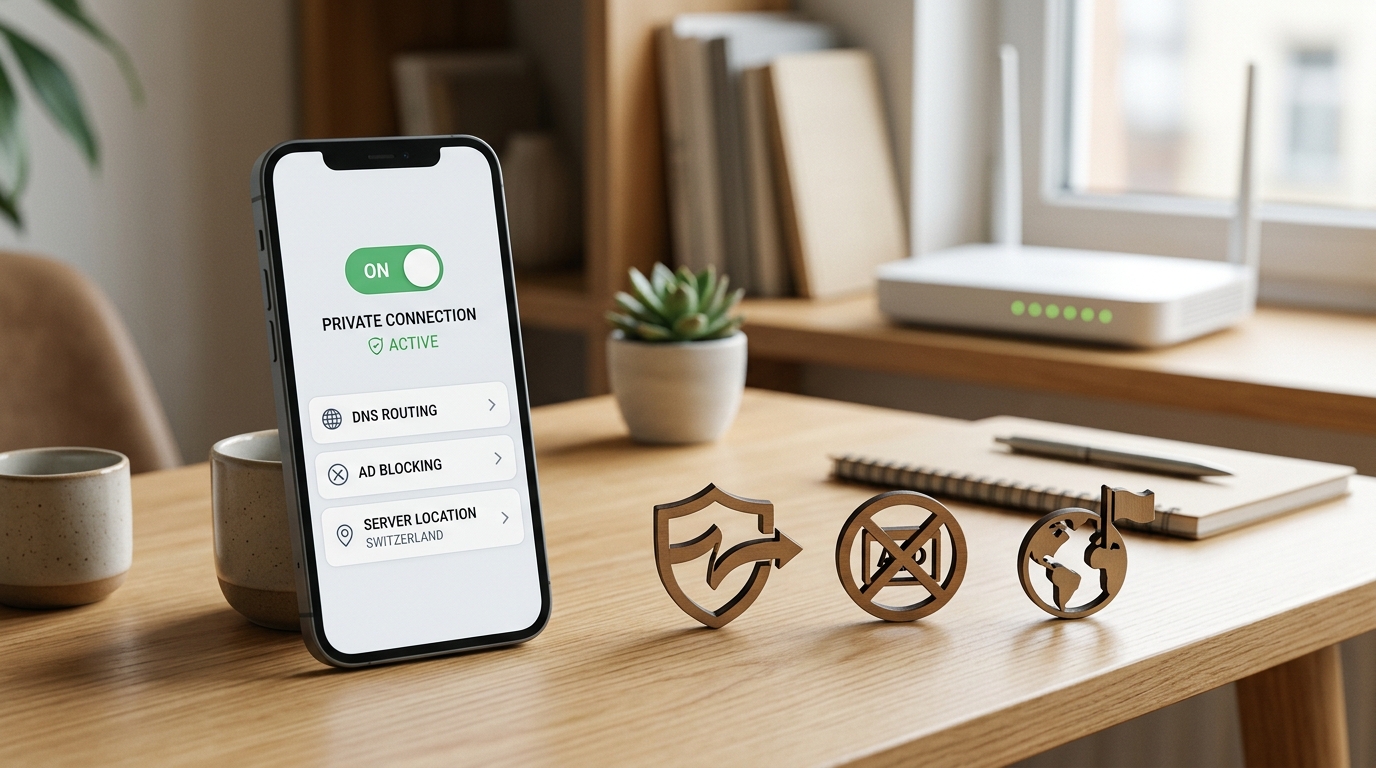
That is why this category is changing. A VPN app is no longer judged only by whether it can connect to another country. Users now expect a private layer for everyday browsing, a cleaner experience through ad filtering, simpler DNS control, and less setup anxiety across iPhone and Android. For people who want those outcomes without turning privacy into a hobby, VPN 111: Warp IP DNS Changer is a mobile app designed for exactly that use case on mainstream phones.
Brand searches now reflect use-case searches
When someone types surfshark or turbo vpn into search, they may think they are comparing services. In practice, they are often comparing promises: speed, ease, fewer ads, broader country access, cleaner app design, and whether the tool feels trustworthy on a small screen. The same applies to searches for binwiz vpn, ostrich vpn, and vpn super. These queries increasingly stand in for questions like:
- Will this work on public wifi without endless setup?
- Will it help on home wifi when pages route strangely?
- Will it reduce tracking noise or just move my IP?
- Will it feel lightweight, or will it drain battery and patience?
That behavioral shift matters because it changes how privacy apps should be compared. A classic checklist focused on server count alone misses what many mobile users actually care about. Unlike old desktop-first thinking, today’s app selection is shaped by quick sessions, unstable wireless internet, app-store screenshots, and the need to solve one problem immediately.
Convenience now competes with control
One of the clearest market shifts is that users no longer separate VPN, DNS changer tools, and ad blocking as neatly as the industry once did. They expect overlap. A person who once installed a VPN for travel may now also want a built-in blocker layer for ad-heavy browsing, basic DNS flexibility, and fast switching between regions.
That helps explain why broad terms like free vpn, x vpn, super vpn, or even searches connected to browser privacy keep appearing together. Users are building a practical stack, not an ideological one. They may use Opera, Opera GX, Brave, Aloha, or another private browser, but they still want an app-level solution underneath it because browser privacy and network privacy solve different problems.
In my experience, this is especially true for people managing multiple accounts, verification flows, or region-sensitive signups. When the network layer behaves inconsistently, identity tasks become harder. A private network tool cannot fix every verification issue, but it can reduce avoidable friction caused by unstable routing, noisy DNS behavior, or exposed IP patterns.
Mobile users now prefer bundled simplicity over fragmented tools
Here is the practical comparison many people are really making, whether they realize it or not:
| Approach | What it gives you | Common downside |
|---|---|---|
| Single-purpose VPN app | IP masking and region switching | You may still need separate DNS and ad-block tools |
| Private browser only | Some tracking reduction inside the browser | Other app traffic and network behavior remain exposed |
| DNS-only solution such as 1 1 1 1 style usage | Resolver control and sometimes faster lookups | Not the same as full VPN protection |
| Bundled mobile privacy app | VPN, DNS changes, and ad blocking in one place | Quality depends on execution and ease of use |
This is where the category is heading. Users want fewer moving parts. They do not want to compare proton vpn, nord vpn, express vpn, hotspot shield, pia vpn, and every niche option every time they connect to airport wifi. They want something that works, feels private, and does not require reading a forum thread before breakfast.
If your goal is cleaner everyday mobile use rather than endless tweaking, VPN 111: Warp IP DNS Changer’s combined VPN, DNS, and ad-blocking approach is designed for that. That does not make it the right choice for every person, but it does reflect the direction the app category itself is moving.
Trust is now built through clarity, not just big claims
A few years ago, many users would pick whichever VPN looked fastest or most heavily promoted. That habit is fading. People are more skeptical, and honestly, that is healthy. Search behavior around names like surfshark, binwiz vpn, turbo vpn, ostrich vpn, and vpn super often signals comparison fatigue. Users are trying to filter noise.
The better way to compare any privacy app is simple:
- Check whether the app explains what it actually does: VPN, DNS changing, ad blocking, or some mix.
- Test how quickly you can connect and switch countries.
- Notice whether the interface makes status obvious. Unclear connection states are a real usability problem.
- See how it behaves on café wifi, home wifi, and mobile data. Real performance varies by network.
- Ask whether the tool reduces friction in daily use, not just in benchmark screenshots.
This also explains why smaller or less familiar names sometimes trend unexpectedly. A niche app may spread because it solves one visible annoyance well, while a larger product may lose attention if it feels bloated. Category momentum now comes from user experience stories, not just brand recognition.
The best app depends on the kind of privacy problem you actually have
Not everyone searching these terms needs the same thing.
Best fit for: students using public wifi, freelancers working across countries, travelers switching between wireless internet networks, everyday iPhone or Android users who want a free vpn experience with less clutter, and people who prefer one app instead of juggling a browser extension plus DNS plus separate blocker.
Probably not for: enterprise teams needing SASE policy controls, security administrators looking for PRTG-style network monitoring, or advanced users who want deep protocol tuning above convenience. Those are different problems. A consumer privacy app should not pretend to be a corporate network stack.
That distinction matters because category confusion wastes time. A mobile VPN is about practical personal privacy and connection control. It is not a full observability suite, not a corporate private network gateway, and not a magic fix for every blocked service.

User behavior now rewards low-friction privacy
The strongest trend I see is that people stick with privacy tools they can understand in seconds. If an app makes basic actions obvious—connect, change region, switch DNS behavior, reduce ad noise—it has a better chance of becoming part of someone’s daily routine.
This is also why generic alternatives often fall short. A browser with private features can help, but it cannot fully replace a device-level network tool. A DNS app can help, but it is not always enough on its own. A plain VPN can route traffic, but it may leave users reaching for extra tools to block ads or simplify browsing. The market is slowly favoring combinations that reduce that tool sprawl.
People often compare tools that do not actually solve the same layer of the problem. I would take that one step further: current search trends show users are still mixing categories, but they increasingly expect one mobile app to cover the layers they care about most.
Practical questions reveal what the market is really asking
Is a free vpn enough for normal daily use?
Sometimes, yes—if your needs are basic and the app is clear about what it offers. But free access alone should not be your only filter; usability and feature fit matter more than the label.
Does a private browser replace a VPN?
No. A private browser helps inside browsing sessions, while a VPN affects the network path for device traffic. They can complement each other.
Why do people compare turbo vpn, vpn super, and similar apps if they are not identical?
Because users compare outcomes, not architecture. They want smoother, cleaner, more private mobile use.
When does DNS changing matter?
It matters when you want more control over how domains are resolved, when browsing feels inconsistent, or when you want an added layer of customization beyond the default network setup.
The smartest takeaway is to compare workflows, not logos
If you are evaluating surfshark, binwiz vpn, turbo vpn, ostrich vpn, or vpn super, start with your daily workflow. Do you mostly need safer wifi sessions? Do you want fewer ad interruptions? Do you switch among all countries for access needs? Do you want a fast mobile app that behaves well on iPhone? Those answers are more useful than a generic “best VPN” list.
I also recommend paying attention to app-store behavior patterns. Privacy apps increasingly win when they make setup simple, communicate clearly, and respect the fact that most users are solving a small but urgent problem. The category is moving away from feature inflation and toward practical trust.
For readers who want more context on why ad reduction changes real-world use so much, built-in ad blocking is one of the clearest examples of how a VPN can affect everyday browsing beyond simple IP routing. It complements the trend discussed here: people do not just want hidden traffic; they want a calmer, cleaner mobile experience.
And if you are interested in the broader app ecosystem behind tools like this, Verity’s mobile app portfolio gives useful context for how consumer privacy and verification utilities are increasingly designed around fast, practical tasks.
The larger point is simple. Search trends around surfshark, binwiz vpn, turbo vpn, ostrich vpn, and vpn super are really telling us that users are done treating privacy as a specialist project. They want a mobile-first tool that feels private, clear, and manageable on real networks. If that is your goal, choose the app that reduces daily friction—not the one with the loudest claim.